
Active park
Venice Beach Skatepark
Los Angeles beachside concrete park and modern public skate landmark.

Mostly parks, with a few historically important street spots. Includes active parks and closed/legacy places that shaped skateboarding.
Los Angeles beachside concrete park and modern public skate landmark.

Portland DIY icon under the bridge; one of skateboarding's legendary concrete landmarks.

South Philadelphia DIY park known for heavy concrete, bowls, and serious terrain.

Jacksonville landmark often cited as one of the oldest surviving skateparks.
Philadelphia plaza and legendary street spot. Closed to skating, but essential in skate history.
San Francisco street skating landmark tied to the 1990s technical street explosion.
Famous school gap from video parts and magazine-era skate history.
New York brick banks and rails, one of the most recognized street spots in skateboarding.

Large Houston public skatepark and major Texas concrete destination.
Boards, wheels, trucks, shoes, bearings, and other setup parts. Starter entries are sourced placeholders so the archive can grow without copying random product images.

This is set up to become one huge page of boards organized by year, crew/team, brand, rider, and graphic. Images use a safe blank deck placeholder until approved deck art files are added.
Powell-built slalom deck marketed through Sims.
Company foundation that led into major 1980s pro graphics and Bones Brigade culture.
Early Powell-Peralta pro model lineage and important starter entry for the sponsored deck wall.
Caballero turned pro in 1980 and became one of the key Powell-Peralta/Bones Brigade names.
Mountain moved into the Powell-Peralta orbit after Variflex, helping shape the team/video era.
Jim Phillips graphic tied to Santa Cruz/Speed Wheels and one of skateboarding's most recognizable images.
Powell-Peralta deck and Tracker trucks documented by the Smithsonian as Hawk competition equipment.
1980s Vision/Gator ramp deck reference placeholder for the Vision crew/archive lane.
These use your supplied reference images and the Skull Skates museum page as a guide. Cards marked "verified visual" are named from visible board text or unmistakable graphics; anything fuzzy stays out for now.
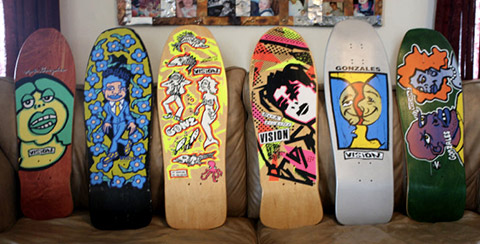
Vision / Mark Gonzales. Visible name and split-face graphic in the couch lineup reference.
Vision Psycho Stick style deck from the couch lineup. Kept as model/brand until rider info is confirmed.
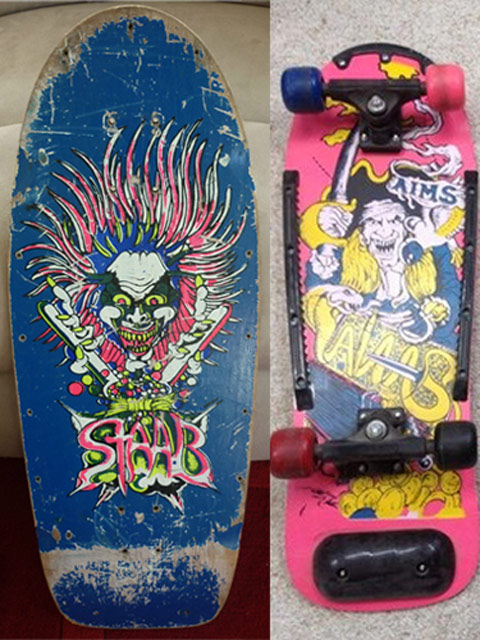
Sims / Kevin Staab. The Staab logo and pirate graphic are clear in your supplied image.
Sims / Kevin Staab complete. Included because the Sims and Staab marks are visible.
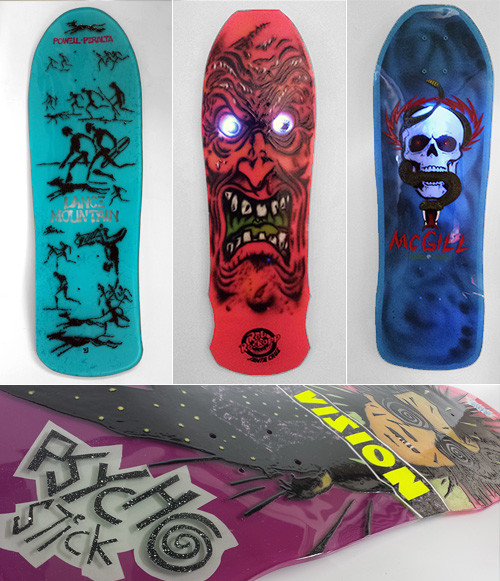
Powell-Peralta / Lance Mountain. Skeleton and chess-floor art visible in your Powell reference.
Powell-Peralta / Ray Barbee. The Barbee name and maze-style graphic are visible.
Powell-Peralta / Mike McGill. The McGill text and skull/snake art are clear.
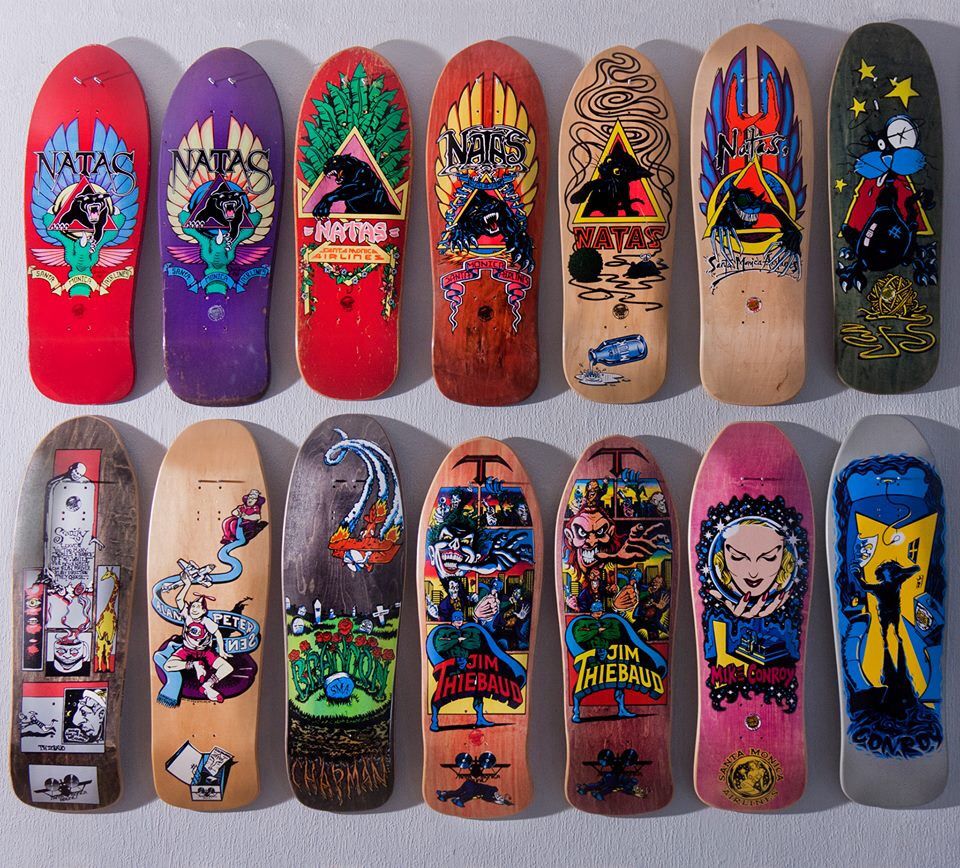
Santa Monica Airlines / Natas Kaupas. The panther graphic appears multiple times in the Natas reference.
Santa Monica Airlines / Jim Thiebaud. Name is readable on the lower-row boards.
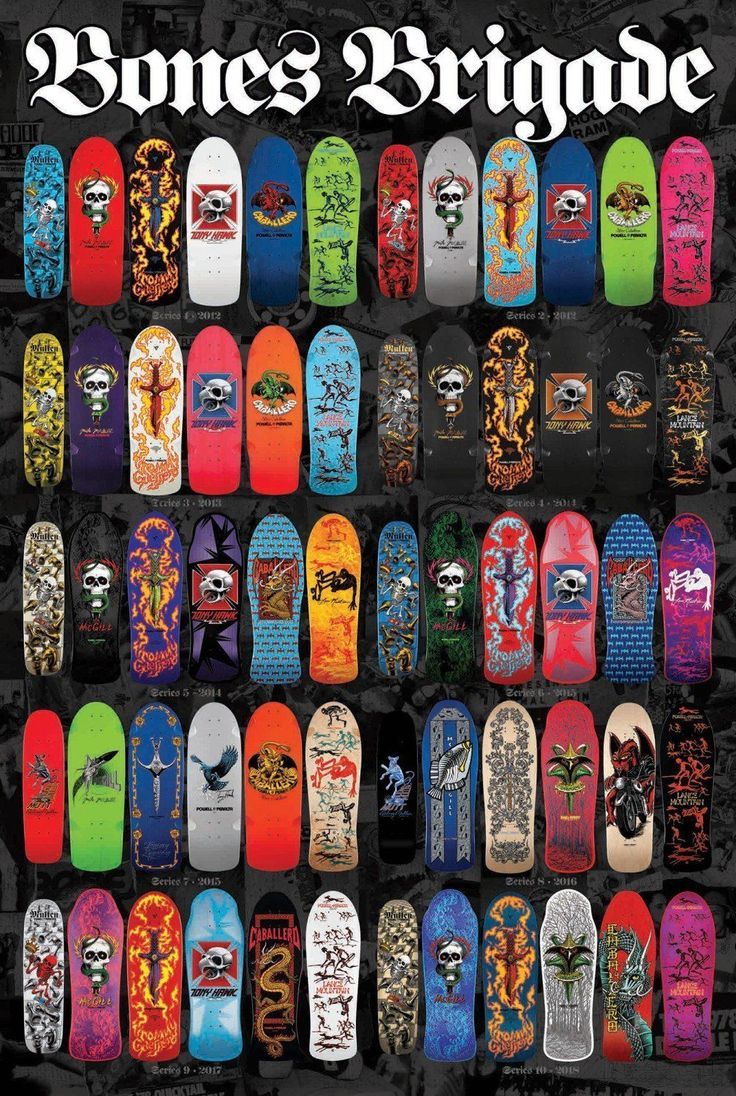
Bones Brigade reissue lane. McGill skull-and-snake art is visible in the poster reference.
Powell-Peralta / Tony Hawk. Classic skull graphic appears across the Bones Brigade lineup reference.
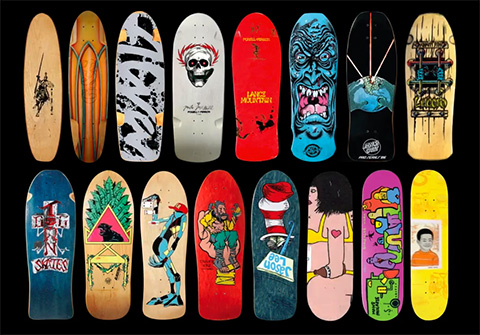
Recognizable lane for Rob Roskopp Face, Corey O'Brien Reaper, Natas Panther, Slasher, and creature-style Santa Cruz art. Split into individual cards after cleaner source images are added.
Sources used for this first pass: Lemelson/Smithsonian Tony Hawk equipment story, Powell-Peralta history references, Santa Cruz/NHS Screaming Hand history, DeckArts skateboard art timeline, and Independent Trucks history. Add licensed deck images later under assets/decks/.
Frank Nasworthy's urethane wheel breakthrough lane. This is where the archive starts before modern park/street wheel culture.
Classic 1970s wheel family tied to the early high-performance urethane era.
Iconic mid-to-late 1970s Kryptonics wheel line, often called out as a major turning point for wheel performance.
Santa Cruz/NHS wheel branch, with orange slalom/park heritage and later OJ identity.
Santa Cruz Speed Wheels lane for Slime Balls, Bullet, wheel videos, and bold 1980s wheel graphics.
Powell-Peralta wheel family lane for Bones, RollerBones, Rat Bones, and reissue notes.
1990s technical street lane: tiny, hard wheels, ledges, rails, curb spots, and rough-city skating.
Future lane for Spitfire Formula Four, Bones STF/SPF, Ricta, OJ modern formulas, durometer, shapes, and reviews.
Independent launched in 1978 under the NHS/Santa Cruz orbit; this starts the truck archive.
Tracker appears in documented Tony Hawk competition equipment and belongs in the vert-era setup lane.
Placeholder for Ace, Thunder, Venture, Independent Stage 11, geometry, heights, bushings, and kingpins.
Future archive for skate shoe models, riders, video parts, and durability notes.
DC, eS, Emerica, Etnies, Osiris, and the puffy shoe era.
Nike SB, Adidas Skateboarding, Converse CONS, New Balance Numeric, and current review data later.
Placeholder for Bones Swiss, Reds, bearing shields, cleaning notes, and rider setup links.
Bronson, Modus, Independent, ABEC myths, spacers, shields, and maintenance notes.
Old-school plastic accessories, hardware, grip, rails, and protection gear.
Helmets, pads, wrist guards, park rules, beginner safety, and vert/bowl essentials.
Popular and influential skaters, arranged like a browsing wall. Images are public/sourceable where available; placeholders mark profiles that need approved skating photos.

One of skateboarding's most recognizable names; vert pioneer, 900 milestone, games, and mainstream bridge.
Foundation of modern street trick language. Needs approved action photo.
Style, creativity, Video Days, art, and street skating mythology. Needs approved action photo.
Powell-Peralta/Bones Brigade cornerstone and enduring pro model lineage.

Modern street contest dominance, handrail progression, and global visibility.

Olympic street gold medalist and one of modern street skating's key global names.
Technical creativity, manuals, ledges, and video-part influence. Needs approved action photo.

Brazilian-American pro, contest standout, and one of women's street skating's most visible names.

Brazilian street phenom, Olympic medalist, SLS champion, and modern global star.

Park skater, Olympic medalist, and one of the most visible young skaters in the world.

Transition and park standout with major influence in modern women's skateboarding.
Skateboarding grew from homemade sidewalk rides into a worldwide culture built around invention, style, places, film, art, and community. This history follows the major eras while leaving room for the local scenes and overlooked people that made each era real.

Skateboarding did not begin with one inventor or one official starting line. Early riders attached roller-skate wheels to pieces of wood, while California surfers searched for a way to carry the feeling of surfing onto pavement when the ocean was quiet. The loose idea became known as sidewalk surfing.
By the early 1960s, surf shops and manufacturers were selling purpose-built boards, organizing teams, and staging exhibitions. Early contests focused on freestyle and slalom because ramps, modern street tricks, and skateparks had not yet developed.
Patti McGee became one of the era's most visible skaters through demonstrations, television appearances, and magazine coverage. The first wave faded later in the decade as safety fears, rough equipment, and bans made skateboarding harder to sell.
The Skeeter Skate pairs four wheels with an early turning axle, helping boards steer instead of only rolling straight.
Roller Derby releases a mass-produced skateboard, moving the idea beyond homemade planks.
The Quarterly Skateboarder becomes the first dedicated skateboarding magazine.
A nationally televised championship and Patti McGee's Life cover carry skating into mainstream view.

The arrival of polyurethane wheels gave boards far more grip and control than earlier metal or clay wheels. That equipment breakthrough brought skateboarding back, encouraged wider decks and skate-specific trucks, and let riders explore terrain with more speed and confidence.
Skaters treated drainage banks, reservoirs, schoolyards, and empty swimming pools as terrain. At the 1975 Del Mar contest, the Zephyr team, later remembered as the Z-Boys, brought a low, aggressive surf style that helped redirect the culture. Riders including Jay Adams, Tony Alva, Peggy Oki, and Stacy Peralta became central figures in that story.
Commercial skateparks spread quickly, while pool skating pushed toward vertical walls and aerial movement. Alan Gelfand's no-hands aerial, later called the ollie, opened a path toward the trick language that would define later decades. Insurance costs and park closures eventually forced skaters back toward homemade ramps and found terrain.
Larry Stevenson patents the kicktail, giving riders leverage for turns and tricks.
Frank Nasworthy introduces Cadillac polyurethane wheels and dramatically improves traction.
Tom Stewart builds the Rampage, an early halfpipe that helps define purpose-built vert terrain.
Alan Gelfand's ollie proves a skater can launch into the air without grabbing the board.

During the 1980s, skater-run companies, backyard ramps, contests, magazines, graphics, and team videos gave skateboarding a stronger identity of its own. Vert skating produced major stars, but most skaters still learned wherever they could find pavement, curbs, banks, and homemade ramps.
Rodney Mullen transformed freestyle with tricks that became the foundation of modern street skating, including the flatground ollie and kickflip. Tony Hawk, Steve Caballero, Lance Mountain, and the Bones Brigade helped define the team-video era and brought distinct personalities into homes far beyond established skate scenes.
As street skating absorbed freestyle technique, ordinary architecture became skate terrain. Curbs, stairs, handrails, loading docks, plazas, and schoolyards offered a nearly unlimited set of problems to solve, even as property owners and cities increasingly pushed back.
Thrasher launches and gives the harder-edged skate scene a lasting voice.
Tommy Guerrero wins an early street-style contest in San Francisco's Golden Gate Park.
The Bones Brigade Video Show demonstrates how team videos can teach tricks and build skate personalities.
Mark Gonzales pushes street skating onto handrails and into a more imaginative future.

Street skating became the dominant language of the 1990s. Boards narrowed, wheels became smaller and harder, and tricks grew more technical. Skaters studied ledges, gaps, rails, stairs, and lines through plazas, often building a spot's reputation one video part or magazine photo at a time.
Independent companies, crews, shops, magazines, and videos carried the culture during a period that could feel underground and intensely local. Places such as EMB in San Francisco and LOVE Park in Philadelphia became globally known because of the skaters who repeatedly reinterpreted them.
Video parts became a skater's most lasting statement. Style, trick selection, music, filming, and the personality of a city mattered alongside difficulty. This era established much of the board shape, street vocabulary, and media format that still anchors skateboarding.
Tony Hawk launches Birdhouse during a difficult period for the skate industry.
The first X Games gives skateboarding a recurring television stage and a much larger audience.
Tony Hawk lands the 900 at the X Games after repeated attempts.
Tony Hawk's Pro Skater brings tricks, skaters, music, and spot culture into millions of homes.

Televised contests, skate videos, DVDs, video games, websites, and major shoe companies introduced skateboarding to a much wider audience. The culture kept its local and independent roots while becoming a significant global industry.
Cities built more public parks and skate plazas, often with skaters involved in the design. Go Skateboarding Day began in 2003, and community programs used skateboarding to build confidence, connection, and educational opportunity. Organizations such as Skateistan demonstrated that skateboarding could become a tool for youth development across very different communities.
The era also expanded the idea of a professional path. Contest skating, video careers, media work, design, photography, filming, park building, and brand ownership all became visible parts of the skateboarding world.
Go Skateboarding Day develops into an annual worldwide reason to meet up and roll together.
Danny Way clears a 79-foot mega-ramp gap, showing the scale modern ramp skating can reach.
The Skateboarding Hall of Fame begins formally recognizing influential skaters and contributors.
Community projects such as Skateistan show how skating can support education and connection.
Social platforms changed how quickly tricks, spots, and unknown skaters could travel across the world. A clip filmed on a phone could reach a global audience immediately, while longer video projects and local premieres continued to matter as cultural events.
Women and skaters from scenes long overlooked by mainstream media gained greater visibility, sponsorship, and competitive opportunities. DIY parks, preservation campaigns, adaptive skating, community organizations, and new public spaces broadened the meaning of participation.
Skateboarding entered the Olympics at the Tokyo 2020 Games, held in 2021, with street and park events. Its inclusion placed skateboarding inside a traditional sporting institution, but the culture remains larger than competition: it is still transportation, art, friendship, risk, design, memory, and a personal way of reading the built world.
Street League Skateboarding introduces a polished contest series built around street obstacles and scoring.
Twelve-year-old Tom Schaar lands a 1080 on a mega ramp, extending aerial rotation progression.
The International Olympic Committee confirms skateboarding for the Tokyo Games.
Yuto Horigome, Momiji Nishiya, Keegan Palmer, and Sakura Yosozumi become skateboarding's first Olympic gold medalists.
Each generation inherits techniques, then changes them through new terrain, equipment, combinations, and personal style.
Skate filmmaking records progression while shaping fashion, music taste, humor, editing, and how places are remembered.
Deck graphics, photography, magazines, shoes, and brands have made skateboarding a powerful visual culture.
Skateparks offer purpose-built terrain, while street skating continually raises questions about public space, property, preservation, and who gets to use a city.
This first Sk3Bank history pass uses broad historical references, including the Wikipedia skateboarding overview and SurferToday's skateboarding timeline, as starting frameworks. Future entries can connect highlighted skaters, teams, companies, spots, and videos to deeper Sk3Bank archive pages.
Videos, magazines, games, channels, and curated best-of collections.
Curated placeholder for influential parts, links, eras, tricks, and skaters.
Skate magazines as history artifacts, ads, covers, interviews, and brand records.
Most influential skaters, board graphics, teams, videos, parks, and tricks.